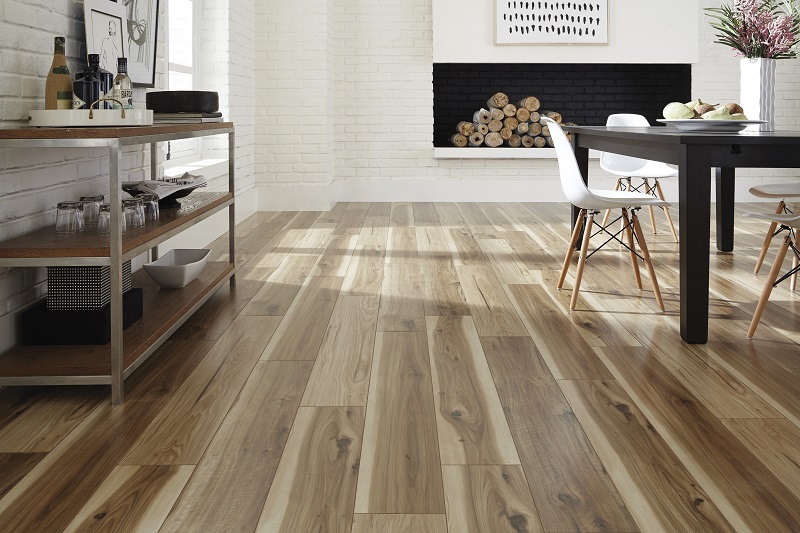
What matters in a kitchen floor
The kitchen is the hardest-working floor in most homes. It faces water and grease spills, dropped utensils, heavy appliances and the most footfall in the house. The priorities are clear: water resistance, durability, easy cleaning and a comfortable feel underfoot for the time you spend standing at the worktop.
The best kitchen flooring options
LVT (luxury vinyl tile) is the standout all-rounder. It is water-resistant, warm, quiet and tough, with realistic wood and stone looks. It handles spills and footfall well and suits underfloor heating.
Vinyl is the budget-friendly choice. Fully waterproof and soft underfoot, it is forgiving of dropped crockery and simple to wipe clean. Sheet vinyl has the fewest seams for water to reach.
Tile (porcelain or ceramic) is the most water- and heat-resistant, and extremely durable. The trade-offs are a hard, cold surface — though underfloor heating solves the cold — and dropped items are more likely to break.
Engineered wood can work in a kitchen where solid wood cannot, as its stable core copes with humidity changes, provided spills are wiped promptly. It brings warmth and value but needs more care than LVT or tile.
What to avoid
Carpet has no place in a kitchen — it absorbs spills and odours. Standard laminate is risky too, because water can swell the core through the joints; only a water-resistant laminate range should be considered, and even then LVT usually serves better.
The verdict
For most UK kitchens, LVT offers the best balance of looks, comfort and practicality. Choose tile if you want maximum durability and have underfloor heating, or engineered wood if a warm, natural look matters more than low maintenance.