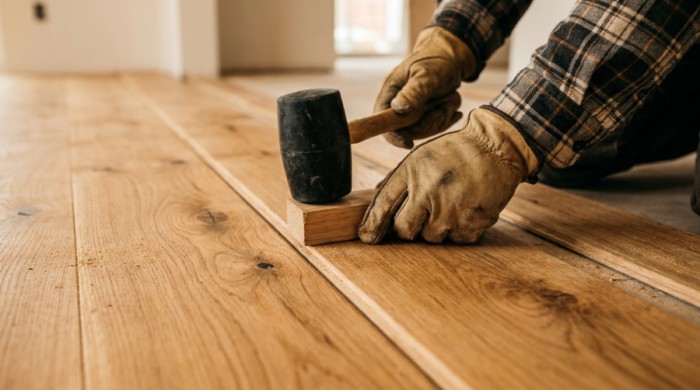
What is wood flooring?
Wood flooring comes in two forms. Solid wood is a single piece of timber throughout, while engineered wood has a real-wood top layer bonded to a stable plywood core. Both give the genuine look and feel of timber; engineered wood handles moisture and underfloor heating better, while solid wood can be sanded and refinished more times.
Key features
- Genuine timber with natural grain and character.
- Engineered wood is more stable and suits underfloor heating.
- Solid wood can be sanded and refinished several times.
- Adds long-term value and a premium feel to a home.
- A wide range of species, finishes and board widths.
Where wood works best
Wood suits living rooms, dining rooms, bedrooms and hallways. Engineered wood is the better choice over underfloor heating or in kitchens, as it copes with temperature and humidity changes. Avoid solid wood in bathrooms and very damp areas.
Caring for wood
Sweep and use a wood-specific cleaner sparingly — never a wet mop. Refresh the finish as advised by the manufacturer. Rugs in high-traffic spots and felt pads under furniture protect the surface.
What wood costs
Engineered wood runs £30–£70/m² and solid wood £40–£90/m², with fitting from £15–£30/m². Our wood cost guide compares the two in detail.