What is carpet flooring?
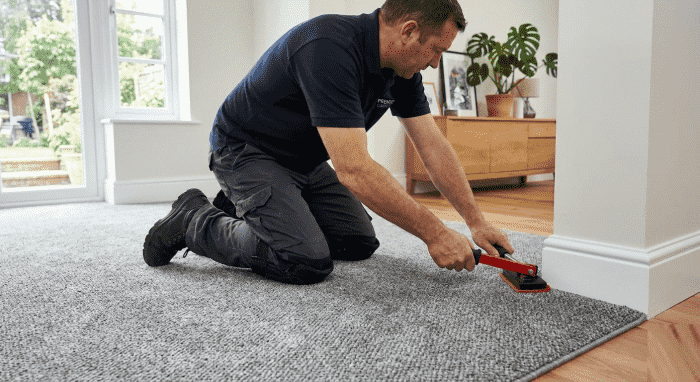
Carpet is a textile floor covering made from fibres tufted into a backing. It is the softest and warmest flooring you can choose, which is why it remains the most popular option for bedrooms and stairs in UK homes. Carpet is sold by the square metre and usually fitted over an underlay, which adds comfort, insulation and life to the carpet above it.
The feel and durability of a carpet come down to two things: the fibre and the pile. Get those right for the room and a carpet will look good for years. Get them wrong and it will flatten or stain quickly.
Carpet fibres explained
There are four common fibres, each with a clear trade-off:
- Polypropylene is the budget choice. It resists stains and bleach-cleaning well, but flattens faster, so it suits low-traffic rooms.
- Polyamide (nylon) is the most hard-wearing synthetic. It springs back well and holds colour, making it a strong all-rounder for stairs and landings.
- Wool is the natural premium option. It feels luxurious, resists soiling and is naturally flame-retardant, but costs more and needs gentler cleaning.
- Wool-mix (80/20) blends wool with nylon for a balance of looks, resilience and price. It is a popular choice for living rooms.
Pile types
Pile is how the fibre is finished. Loop pile (such as Berber) leaves the yarn in uncut loops, giving a hard-wearing, textured surface that hides footprints. Cut pile snips the loops for a softer, more formal finish, with variants like Saxony (deep and plush) and twist (tightly turned, good for stairs). Higher-traffic areas suit a tighter twist or loop; bedrooms can take a softer Saxony.
Where carpet works best
Carpet belongs in rooms where comfort and warmth matter and moisture does not: bedrooms, living rooms, stairs, landings and home offices. It softens sound between floors, which is valuable in flats and family homes. It is not suited to kitchens, bathrooms or utility rooms, where spills and humidity will damage the fibres and backing.
Caring for carpet
Vacuum regularly to stop grit cutting the fibres from below. Treat spills immediately by blotting, never rubbing. Professional cleaning every 12 to 18 months keeps the pile fresh and protects any warranty. Using barrier mats at external doors cuts the dirt that reaches the carpet in the first place.
What carpet costs
Carpet is one of the more affordable floors. Budget polypropylene starts near £8/m², mid-range wool-mix sits around £20–£30/m², and premium wool can exceed £40/m². Fitting typically adds £4–£8/m², plus underlay and gripper. Our carpet cost guide breaks this down in full, and the carpet fitting calculator estimates how much you need.