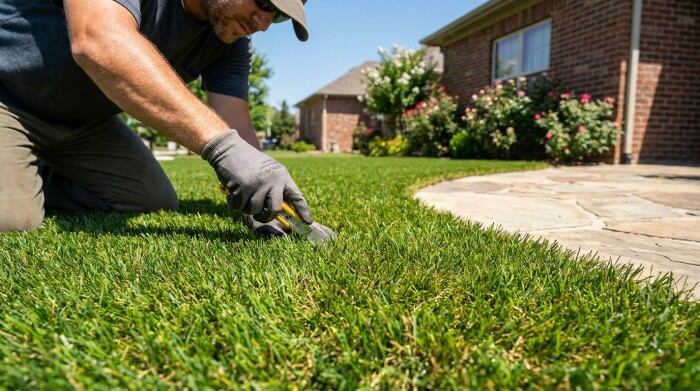
What is artificial grass flooring?
Artificial grass is a synthetic turf made from polyethylene or polypropylene fibres on a permeable backing. It gives a green, even lawn with no mowing, watering or muddy patches, and stays usable through wet British winters. Quality is judged by pile height, density and how natural the blade colours look.
Key features
- No mowing, watering or feeding needed.
- Stays green and usable all year, even in wet weather.
- Permeable backing lets rainwater drain away.
- Pet- and child-friendly when installed correctly.
- Lifespans of 10 to 20 years with good groundwork.
Where artificial grass works best
Artificial grass suits gardens, front lawns, balconies, roof terraces and play areas. It is ideal for small or shaded gardens where real grass struggles, and for households that want a usable lawn without the upkeep. The groundwork beneath it matters as much as the turf itself.
Caring for artificial grass
Brush the pile occasionally to keep it upright, rinse off dust, and remove leaves before they break down. For pet owners, hose down soiled areas and the permeable backing drains them away. No chemicals or mowing required.
What artificial grass costs
Grass itself costs £12–£35/m², but the groundwork — excavation, sub-base, membrane and joining — often costs more than the turf and is where quality is won or lost. See our artificial grass cost guide.